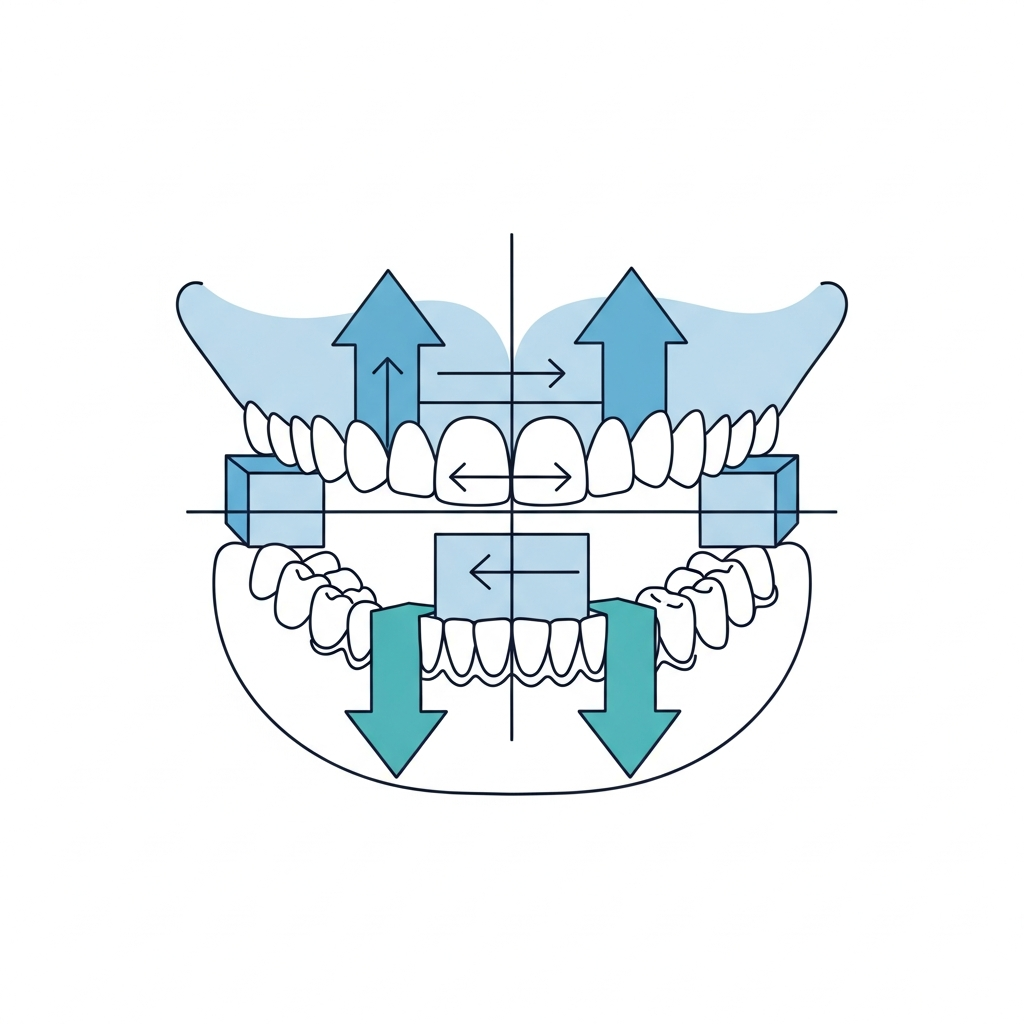
Orthognathic surgery repositions one or both jaws when jaw relationships cannot be corrected with orthodontics alone. Planning is not based on appearance in isolation: chewing, speech, airway, joint health, dental alignment and facial proportion all matter.
A combined surgical and orthodontic pathway
For many patients, treatment is coordinated between an oral and maxillofacial surgeon and an orthodontist. Orthodontics may be required before surgery to place the teeth in positions that will fit correctly after the jaws are moved. Further orthodontic finishing commonly follows surgery.
Records used for planning
Assessment can include facial and oral examination, photographs, dental models or digital scans and appropriate radiographic or three-dimensional imaging. These records help the team analyse jaw position, dental compensation, asymmetry and the movements required to achieve a functional bite.
From plan to operation
The proposed movements, expected facial changes and limitations should be explained before treatment. Depending on the diagnosis, surgery may involve the upper jaw, lower jaw, chin or a combination. Jaw bones are generally repositioned through incisions inside the mouth and stabilised with small plates and screws.
Recovery is part of the plan
Swelling, temporary dietary changes, fatigue and altered sensation can occur after surgery. Lower-jaw procedures can affect sensation in the lower lip and chin, sometimes for a prolonged period. The exact risk profile depends on the operation and the individual. Follow-up monitors healing, bite, nutrition, oral hygiene and return to normal activity.
Shared decision-making
Jaw surgery is elective in many circumstances and deserves time for questions. The decision should follow a clear discussion of expected benefits, alternatives, material risks, recovery and the possibility that outcomes may differ from the prediction.
Read independent patient information on orthognathic surgery